“Buy it for life” gets thrown around loosely online. People use it to describe a jacket or coffee maker they bought eighteen months ago and still like. The threads that live up to the name look different: someone posts a photo of a cast iron skillet their grandmother bought in the 1940s, or a Makita drill from 1978, and explains why it still runs every week.
This guide pulls together the products that show up across r/BuyItForLife, r/Tools, and r/Cooking with multi-decade ownership stories attached. Workshop tools and heavy cookware dominate the list because forged steel, cast iron, and repairable motors age far better than consumer electronics.
One distinction matters up front: “lasts thirty years” and “worth your money” are two separate questions. A commercial blender can run for two decades and still be a waste of counter space if you only make smoothies twice a summer. Every section below flags who should skip the splurge.
Key takeaways
- Workshop tools have the deepest track records. Mechanics and electricians track which hand tools survive daily shop abuse and which warranties still get honored without a receipt.
- Cast iron is the cheapest forever purchase in the store. A $25 Lodge skillet outlasts ten nonstick pans and gets handed down to grandkids.
- Read the fine print on lifetime warranties. Darn Tough replaces worn-out socks with zero friction; Le Creuset’s warranty covers manufacturing defects rather than dropped lids or overheated enamel.
- Match the durability to your routine. A 25-year appliance only pays off if you use it regularly.
Tools: where buy-it-for-life is most serious
Read r/Tools for twenty minutes and you see how tradespeople evaluate longevity: drop tests from ladders, availability of replacement brushes and switches, and how a tool feels after ten years of grease and sawdust.
The power tool platform decision
For cordless tools, the recurring advice is to pick a major 18V battery platform and stay in it so you aren’t stranded with orphaned chargers. Milwaukee, DeWalt, and Makita lead the pro tier. Summarizing the split from r/Tools:
“I have Milwaukee for my home stuff and Makita for work. The tool diversity Milwaukee has puts it in a great spot, but I’ve abused those Makita tools and they continue to work perfectly year after year.”
Milwaukee leads in trade-specific M18 and M12 tools for mechanics, plumbers, and electricians. DeWalt sits right beside it as the general-construction staple with the widest retail availability and frequent kit sales. Makita earns the strongest reputation for long-term motor reliability and repairability. Ryobi is the consensus homeowner choice: its 18V ONE+ battery footprint hasn’t changed since 1996, meaning a brand-new lithium battery still clicks into a twenty-year-old Ryobi drill.
Bosch rounds out the top five, earning high marks for its blue-line corded rotary hammers, jigsaws, and routers.
Hand tools that outlive their owners
Hand tools have no batteries to age out, so a good wrench or plier bought in your twenties will still be in your toolbox when you retire.
Craftsman comes up constantly in heirloom tool threads, always with a historical caveat: vintage US-made Craftsman ratchets and sockets from the Sears era are legendary, whereas modern offshored production doesn’t carry the same mystique. If you spot vintage -V- series Craftsman wrenches at an estate sale, grab them.
For modern hand tools you can buy new today, German Knipex pliers are treated as the gold standard on r/Tools. Their Cobra water-pump pliers and smooth-jaw Pliers Wrench bite harder and last longer than hardware-store slip joints while costing half what tool-truck brands charge. From an electrician on r/Tools:
“I work at a facility with 60-70 mechanics. The Snap-on guy and the Matco guy come by every week. I lost one of my Knipex channel locks and jumped on the Snap-on truck. The ones I need go for $35-45 at every tool supplier. The snap on guy was selling them for $80!”
Klein (specifically their US-made linesman pliers and 11-in-1 screwdrivers) and Festool (for cabinetmakers who want dust extractors and track saws built to run for twenty years) complete the workshop tier.
Kitchen: the things that last generations
Cast iron is the cheapest BIFL purchase there is
No product in any category beats the durability-to-dollar ratio of bare cast iron. A 12-inch Lodge skillet costs around $25 at any hardware or grocery store and cannot wear out. From r/BuyItForLife:
“The coating on a non-stick pan will fail, rendering the pan garbage. We have cast iron cookware pieces that are between 60 and 100 years old, and will outlast us. Lodge is an inexpensive, reputable brand that has been around since the 1800s.”
Luxury boutique skillets from Smithey or Field Company come machined smooth out of the box for $160+, yet a $25 Lodge develops the exact same slick black patina after a year of searing steaks and baking cornbread.
The cookware people pass down
Among enameled Dutch ovens, Le Creuset inspires decades of loyalty. From r/BuyItForLife:
“I’ve been using multiple Le Creuset for 25 years and never had an issue.”
At the same time, experienced owners caution buyers to understand how the warranty works on enameled iron. As another commenter explained in the same r/BuyItForLife thread:
“Myself and several of my friends and family have sent in our old Le Creusets for warranty, either due to normal wear and tear over 10+ years or thermal shock. All of our warranty claims were technically denied, but in every instance they did the same one-time courtesy replacement.”
Treat any enameled pot gently (avoid heating it empty on high or plunging a hot pot into cold water) and it will serve you for decades.
Fully clad stainless steel pans (led by All-Clad D3) and the stamped Victorinox chef’s knife fill out the stovetop and cutting board. At $45, the Victorinox Fibrox outlasts department-store knife blocks at a fraction of the price.
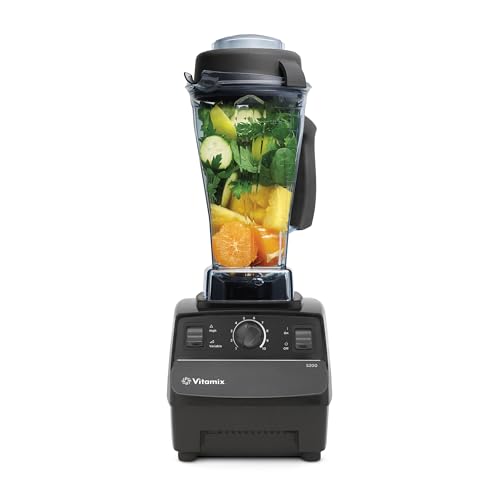
On the appliance counter, a Vitamix is the rare motorized tool that routinely clears the twenty-year mark. From r/BuyItForLife:
“My ex bought a Vitamix using my credit card. I was furious when I found out how much it cost. I’ve had it for about 23 years now and I absolutely love it.”
Again, only spend Vitamix money if you blend multiple times a week; casual smoothie makers are better served by a $50 blender.
Rounding out the kitchen are Pyrex glass containers (which never absorb tomato stains or dishwasher odors the way plastic tubs do) and a fast instant-read thermometer like the ThermoWorks Thermapen ONE, which outlives drawers full of cheap dial probes.
Home and office: the things you sit and sleep on
Two everyday household categories show up constantly when people calculate cost per hour of use.
A good office chair is the top recommendation for anyone working from a desk eight hours a day. Commercial task chairs like the Herman Miller Aeron and Steelcase Leap V2 are engineered for a decade of multi-shift office use, with replaceable gas cylinders, arm pads, and seat pans. Buying one refurbished or secondhand from an office liquidator for $300 to $450 saves you from replacing a peeling $100 big-box chair every two years, and saves your lower back in the process.
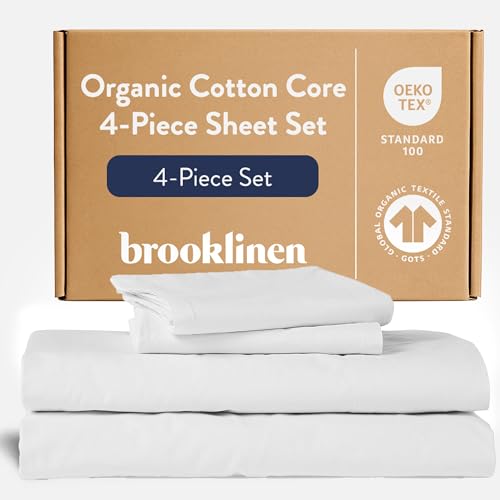
Bed sheets follow a simpler rule: skip both cheap polyester microfiber and fragile high-thread-count sateen, and buy mid-range pure long-staple cotton percale. Crisp percale breathes well, softens with every wash, and holds together for years without pilling.
Clothing: where the warranty is the whole point
Darn Tough socks come up in nearly every clothing thread on r/BuyItForLife because their Vermont mill backs every pair with an unconditional lifetime guarantee. If you ever wear a hole in the heel or toe, you fill out a short form, mail the clean socks back, and receive a voucher code for a brand-new pair on their website. When someone asks which modern brands still stand behind their goods, replies on r/BuyItForLife group them right alongside cast iron:
“Darn Tough, Lodge, several boot companies, Flint and Tinder underwear.”
Replacing your sock drawer slowly with six or seven pairs of merino wool hikers ends sock shopping permanently.
How to tell real BIFL from nostalgia
When browsing durability forums, four quick checks help separate solid buying advice from rose-tinted nostalgia:
- Count in decades, not months. A post praising a backpack bought last autumn is a first impression; a post showing a 15-year-old tool still on the jobsite is durability evidence.
- Verify how the warranty works today. Darn Tough’s warranty is effortless. Other legacy brands have tightened their terms after private-equity buyouts.
- Check whether manufacturing moved. A brand that built cast-iron-gear mixers in 1985 may use plastic gears in its entry-level line today. Look for comments comparing current production to vintage units.
- Separate lifespan from personal fit. An anvil lasts forever, too, yet most people don’t need one in their garage. Buy for your weekly routine first, durability second.
The bias baked into buy-it-for-life
Keep in mind that r/BuyItForLife is built around a specific philosophy: “buy once, cry once.” That mindset is fantastic for work boots, chef’s knives, and daily cookware, and terrible if you let it talk you into buying a $400 commercial tool for a task you do once a year.
Survivorship bias also colors every vintage photo thread. People photograph the one 1975 appliance that survived in their grandparents’ basement, not the ten others that went to the landfill in 1988. Look for brands where dozens of current owners report the same trouble-free experience on recent models, not just one lucky heirloom.
FAQ
What is the best buy-it-for-life purchase for the money?
A 12-inch Lodge cast iron skillet at around $25. It costs the same as a cheap disposable nonstick pan and lasts for generations.
Are these affiliate recommendations or independent?
The picks come from reading owner discussions on Reddit. Upvote Picks does not accept payment from brands to include products. When a card links to Amazon, that link is an affiliate link, which may earn a small commission at no extra cost to you.
Why are the power tool brands listed without a single recommended model?
Because with cordless power tools, you are choosing an 18V battery ecosystem (Milwaukee M18, DeWalt 20V MAX, Makita LXT, or Ryobi ONE+) that powers dozens of different bare tools. Our starter links point to each brand’s standard drill-and-impact combo kit.
Is new Craftsman as good as old Craftsman?
Vintage US-made Craftsman hand tools from the Sears era remain collector favorites. Modern Craftsman tools are decent budget hardware-store options, though mechanics on r/Tools generally point to Tekton, GearWrench, Icon, or Knipex for modern lifetime-quality hand tools.
Source notes
A few of the threads that shaped this guide:
- What was the item that made you hop on the buy-it-for-life train? (r/BuyItForLife)
- What pricey item did you buy and never regretted it? (r/BuyItForLife)
- Buyer Beware: Le Creuset (r/BuyItForLife)
- Are expensive tool brands really worth it? (r/Tools)
- Adam Savage recommends buying the cheapest tool possible (r/Tools)
Related guides
Want the full head-to-head breakdown on specific picks here? See the best power tool brand and drill vs impact driver for the workshop, plus Lodge vs Le Creuset, is a Vitamix worth it, and the best budget chef knife for the kitchen.