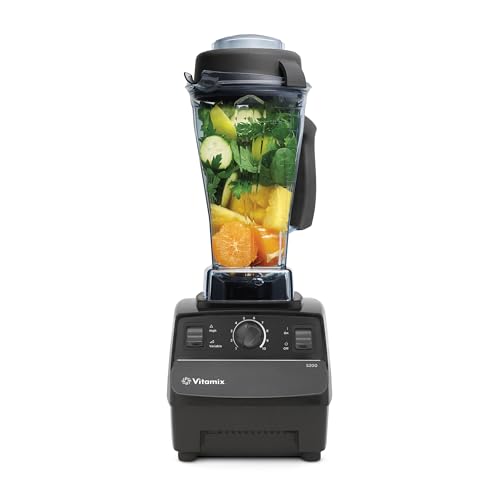
Four hundred dollars for a kitchen blender sounds absurd until you talk to someone who has burned through three $60 blenders in five years, or someone who kept their Vitamix in a divorce.
In a huge r/BuyItForLife thread on expensive purchases people never regretted, one of the top replies came from an owner of 23 years: “My ex bought a Vitamix using my credit card. I was furious when I found out how much it cost. When we broke up a few years later, he was planning to take it with him but I wasn’t going to let that happen. I’ve had it for about 23 years now and I absolutely love it.” As the top reply underneath joked, “‘I got the Vitamix in the divorce!👍’ is one hell of a review for Vitamix.”
If you blend frozen fruit, fibrous greens, hot soups, or nut butters several times a week, a Vitamix ends the cheap-blender replacement cycle for good. If you only blend a banana protein shake once a month, keep your money.
The case for it: ends the cheap-blender cycle
Most people don’t start out wanting a $400 blender. They arrive there after watching a succession of cheaper Oster, Black+Decker, or Ninja pitchers leak at the base, smell like burning rubber on frozen strawberries, or leave kale stems floating in chunks.
One convert on r/BuyItForLife summed up the math: “A Vitamix. I was going through a cheap Oster or whatever blenders every year. I’ve had my Vitamix for about 10 years and it blends 5X better than any of them ever did.”
What separates a Vitamix from a department-store blender isn’t sharp blades; it is horsepower and container geometry. As another commenter explained on r/BuyItForLife, “Vitamix has a big motor and dull blades. They just power through anything. Ninja has a weaker motor with sharp blades that can cut you and wear out.” Driven by a high-torque motor and a tapered pitcher that pulls food straight down into the vortex, a Vitamix pulverizes raspberry seeds, raw carrots, and soaked chickpeas into a velvet purée.
Home cooks who were skeptical before buying point to texture as the surprise payoff. One owner on r/BuyItForLife wrote: “We assumed Vitamix was overhyped until we caught one on sale and finally tried it. It has a lot more horsepower so it blends things much more smoothly. It will also blend a lot of things that a normal blender will just get stuck on. Hummus is a good example. Normal blenders can leave hummus pretty grainy, but the Vitamix makes it super smooth.”
When it is not worth it
Even die-hard owners warn casual users away from spending $400 on a machine that will sit in a cabinet.
If you only make drinks with milk, yogurt, protein powder, and soft berries, a $50 countertop blender or a $35 personal bullet blender will handle your routine without complaint. As one precision-minded cook noted on r/Cooking, “It’s worth the cost if you use a blender to do really fine blends. Soups, smoothies, bases for baking. I blend, pass through a mesh strainer and it’s essentially particulate free. If that isn’t you, I don’t think most ppl need a vitamix.”
Who should buy one, and who should skip it
Buy a Vitamix if you make thick frozen smoothies four or five days a week, purée restaurant-smooth vegetable soups, make homemade hummus or nut butter, or have already killed two cheaper blenders.
Skip it if you blend twice a month, hate loud appliances (a Vitamix at full throttle sounds like a small jet engine), or mainly want to chop vegetables.
Where the Reddit signal misleads you
Reading r/BuyItForLife can make it feel like every household needs commercial-grade appliances on the counter. Keep two caveats in mind before pulling out your card.
First, buying an expensive blender will not turn you into a daily smoothie drinker if you aren’t one already. Plenty of pristine Vitamixes sit in pantry corners because someone bought the machine for a New Year’s health kick that lasted two weeks. Build the habit on a cheap blender first; upgrade when the cheap blender dies.
Second, ignore anyone who claims a Vitamix replaces a food processor. Because the tall pitcher relies on a wet vortex, it turns onions and tomatoes into liquid puree rather than diced salsa, and it cannot shred cheese or slice potatoes. If you want diced prep or pie dough, a dedicated food processor is the tool for that job. And if your main goal is pureeing hot soup right in the Dutch oven without pouring boiling liquid into a pitcher, a $40 immersion blender is much easier to wash, as hundreds of r/Cooking commenters point out.
The value move: buy refurbished, skip the fancy model
You rarely need to pay full retail for a Vitamix, and you definitely don’t need the $650 touchscreen models.
Across both r/Cooking and r/BuyItForLife, the consensus model is the classic Vitamix 5200, the one with two physical toggle switches, a mechanical variable-speed dial, and the tall, narrow 64-ounce container. Because the base of the 5200 pitcher is narrower than the newer “low-profile” wide pitchers sold at warehouse clubs, it can blend a single morning smoothie just as easily as a full batch of soup without leaving ingredients stranded above the blades.
One former line cook on r/Cooking vouched for its pedigree: “Vitamix 5200 is the old standby. I’ve had mine for years and worked in plenty of professional kitchens that use them way more than any home cook.” Another owner on r/BuyItForLife echoed that: “The vitamix 5200 is the way to go. I was convinced after I saw it in the kitchen of the massive hotel I work in, and it’s the one of choice of America’s test kitchen. I’ve had mine for years, and I love it. It can make hot soup from cold raw ingredients and clean itself with a couple of drops of dish soap.”
To knock $100 to $150 off the price, check Vitamix’s Certified Reconditioned program or wait for major Prime Day and holiday sales. As one owner shared on r/BuyItForLife, “Husband bought a reconditioned vita-mix (5200) before we met, and it is still going strong 10+ years later. He got it for around $200 at the time. Definitely worth adding to your kitchen, and the reconditioned units they sell on their site are worth considering.”
What to buy instead, if you skip it
If you only make soft fruit smoothies and want an attachment that also shreds blocks of cheese, a midrange Ninja system gets plenty of love from budget-conscious cooks, like this r/Frugal owner whose Ninja food-processor bowl has shredded far more cheese than smoothies. If you just want silky tomato or butternut squash soup on the stove, grab a $40 immersion blender instead.
Stocking the rest of your kitchen? For most home cooks, upgrading your daily prep tools pays off faster than a high-end blender. See the kitchen tools r/Cooking reaches for every day, the best budget chef knife, and our breakdown of Lodge vs Le Creuset Dutch ovens.
Common questions
Is a Vitamix worth the money? Yes, if you blend several times a week or make tough recipes like fibrous green smoothies, nut butters, and silky puréed soups. Its motor longevity and smooth vortex texture beat cheap blenders that burn out every year or two.
How long does a Vitamix last? In home kitchens, 10 to 20+ years is standard across owner threads, backed by a 7-year (or 5-year on reconditioned) full warranty that covers both the motor base and the pitcher assembly.
Is a refurbished Vitamix worth it? Yes. Factory-reconditioned Vitamix units receive a brand-new pitcher, lid, and tamper alongside an inspected motor base and a multi-year manufacturer warranty, making them the smartest value in the lineup.
Which Vitamix model should I buy? The classic Vitamix 5200 with the tall, narrow 64-ounce container. Skip the pricier Ascent models with NFC “bowl-detect” electronics unless you specifically need under-cabinet clearance from a shorter pitcher.
The buying rule
Wait until you have killed at least one cheap blender through regular weekly use. If your current blender sits dusty in the pantry, a Vitamix will sit dusty too. If you use a blender four days a week and hate grainy smoothies or burnt motors, buy a Vitamix 5200 (ideally on sale or factory reconditioned) and cross blenders off your shopping list for the next fifteen years.