Walk into a big-box hardware aisle as a new homeowner and every display pushes you toward a 10-tool cordless bundle or a $400 rolling chest. Most of those plastic-molded kits stay dusty on a garage shelf while you reach for the same three tools every Saturday. Start with one cordless drill and a small bag of hand tools, add an impact driver on the same battery platform once real projects demand it, and save premium money for the grips and blades your hands touch every week.
Across r/Tools and r/HomeImprovement, tool regrets rarely come from picking the “wrong” major brand. They come from paying contractor prices for a tool used twice a year, buying bargain-bin junk for a job you do every weekend, or accumulating four incompatible battery chargers because every holiday endcap looked like a bargain.
Buy for frequency, not the person you imagine becoming
A pro-grade tool earns its price when three things line up: you already use the basic version often, the upgrade solves a concrete frustration (camming out, slipping jaws, hand fatigue, or dead batteries), and a mid-project failure would cost you an afternoon.
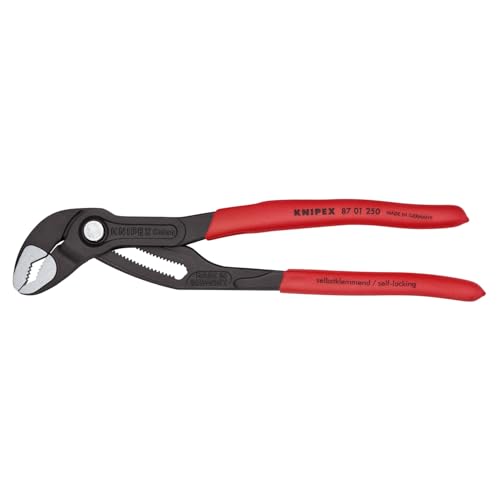
Skip the splurge when you are shopping for a hobby you have not started yet, chasing a higher torque number on a box, or stocking an emergency drawer. That explains why Knipex Cobra pliers are a no-brainer for someone wrenching on plumbing valves every month and overkill for someone who tightens one sink trap a year.
Pick a battery system before you pick a drill
Your first cordless drill is the down payment on a battery ecosystem. Once you own the charger and two packs, your future circular saw, leaf blower, shop vac, and tire inflator will follow that same battery mount.
Owners on r/Tools break the three main platforms down by workload:
- Ryobi for broad, affordable homeowner use: weekend repairs, yard tools, and occasional gadgets that never see a commercial jobsite. As one r/Tools owner put it: “As a homeowner: Ryobi is the best value and more than the performance you’ll need.”
- DeWalt for the contractor-grade default: remodeling, deck building, and heavy DIY when you want tougher ergonomics and easy availability at every hardware store.
- Milwaukee for trade specialty depth and subcompact M12 gear: when automotive, plumbing, or electrical specialty tools matter, or when compact 12V drivers fit inside tight cabinetry and engine bays.
For a deeper look, see Ryobi vs Milwaukee and the best power tool brand guide.
Running two platforms on purpose works well: a heavy-duty line for high-load drills and saws, plus Ryobi for occasional yard and household gadgets. One r/HomeImprovement owner uses that exact setup: “I have Milwaukee for the main tools and Ryobi for random stuff I don’t use a lot… Honestly Ryobi is fine for home use.” Just avoid collecting four random brands from clearance bins.
Drill or impact driver?
For basic apartment and house chores, a single cordless drill/driver covers everything. Its adjustable clutch prevents you from stripping soft particleboard on flat-pack furniture, and its three-jaw chuck accepts round twist bits for drilling pilot holes in drywall and studs.
Once you start building planter boxes, repairing fences, or driving 3-inch deck screws into framing lumber, buy the two-tool drill-and-impact combo. The drill bores clean holes; the impact driver hammers long lag and deck screws home without twisting your wrist when the fastener binds. As one r/Tools owner warned: “A drill will break your wrist when the torque suddenly gets too high. An impact driver won’t.”
Having both also means you stop unchucking the drill bit and swapping in a Phillips tip every thirty seconds. See our full breakdown of drill vs impact driver.
Spend where your hand meets the work
When you upgrade hand tools, pay for hardened steel jaws, machined screwdriver tips, and comfortable handles rather than flashy ratcheting gimmicks.
For water-pump pliers, Knipex Cobra grips rounded hex nuts and pipe fittings with push-button precision, while Channellock remains the classic $18 tongue-and-groove standby for occasional household plumbing. One owner who keeps both summed it up: “I wouldn’t trade my Knipex for anything. However, Channellock makes a better hammer.” The full comparison is in Knipex vs Channellock.
For screwdrivers, Klein makes the rugged 11-in-1 multi-bit driver that lives in a kitchen drawer or tool bag and handles outlet covers, appliances, and hose clamps. Wera shines at a workbench where laser-etched tips grip stubborn screws and prevent stripped heads, as covered in are Wera screwdrivers worth it. Ask yourself where the tool will live and what fasteners it will turn before picking between them.
A starter kit that grows with real work
Start with a single bag: one cordless drill with a set of twist and driver bits, a 25-foot tape measure, a folding utility knife, an adjustable wrench, 10-inch tongue-and-groove pliers, an 11-in-1 multi-bit screwdriver, a 16-ounce claw hammer, a torpedo level, and safety glasses.
Add an impact driver, a second battery, and a circular saw only when a real weekend project puts lumber on your sawhorses. Replace individual hand tools with premium versions only after a cheap one slips, blisters your palm, or rounds off a bolt.
Skip the 12-tool mega-bundle with a cordless flashlight and a weak jigsaw you will never unbox.
Seven questions before buying the next tool
- What specific repair or project will I use this on this month?
- Can a tool already in my bag do that job safely?
- How many times will I touch it over the next year?
- What exact flaw (slipping, slow cuts, wrist strain) am I paying to fix?
- Does it lock me into a new battery pack or proprietary blades?
- Can I rent or borrow it for a one-off weekend job?
- What happens to the project if a cheap version breaks halfway through?
If question one has no project attached, leave the tool on the shelf. If question four has no clear answer, buy the budget version.