The most common buying regret on r/BuyItForLife and r/Frugal isn’t overspending on a luxury item. It is buying the $15 version four times in five years before finally buying the $40 version that lasts.
You see that arc across dozens of everyday categories. Someone replaces a peeling nonstick frying pan every eighteen months for a decade, then buys one tri-ply stainless skillet or a $25 cast iron pan and never shops for a skillet again. Someone burns through five-dollar gas-station charging cords until they switch to a braided cable. Each cheap purchase felt thrifty at the register, yet cost more over five years than buying the durable version up front.
Not every category works that way; plenty of budget items hold up fine, and we list those below too. The products here are the specific categories where rebuying the cheapest option is a false economy.
Key takeaways
- Built-in expiration dates make cheap items expensive. When coatings peel, thin wires fray, or cheap motors burn out, rebuying turns into a subscription.
- Nonstick pans are the top repeat offender. Replacing coated skillets every two years costs far more than a single stainless steel or cast iron pan.
- Upgrade the things you touch daily. Daily use pays back a better tool in months; once-a-year use never does.
- Know where budget still wins. Basic rice cookers, entry-level electric toothbrushes, and simple air fryers work just as well as expensive flagships.
The pattern: when cheap is the expensive choice
The rebuy trap always follows the same script. The bargain version works fine for the first six months. Then the coating scratches, the plastic gear strips, or the elastic blows out. Because the first one only cost fifteen dollars, you grab another cheap replacement on your next grocery run. Five years later, you have spent eighty dollars to use a frustrating product the entire time.
The easiest way to spot a category that punishes cheap buying is to ask whether the failure mode is baked into the materials: sprayed-on nonstick coatings, thin unbraided cable jackets, cotton-blend socks that wear through at the heel, or low-wattage blender motors with plastic drive couplings.
Kitchen: where the replacement cycle is most expensive
Coated nonstick pans top every thread on replacement fatigue. Even if you wash them by hand and ban metal utensils, the polymer surface eventually degrades. From r/Cooking:
“Quality stainless steel, carbon steel or cast iron pans will last you forever. They are truly a buy-it-for-life proposition. Non-stick pans have a time limit. If you baby it you might get a few years out of it, but eventually the finish will start flaking off and you’ll need to throw it away.”
The permanent fix is a stainless steel pan (All-Clad D3 is the longtime benchmark, with Cuisinart MultiClad Pro and Tramontina Tri-Ply as the budget favorites) or a cast iron skillet. Cast iron costs the same $25 as a supermarket nonstick pan and lasts for generations. From r/BuyItForLife:
“$400 set of All-Clad pans bought in 1998. I’ve cooked thousands of meals in them, and expect to leave them to my grandkids. Then there’s the Wagner cast iron skillet I got at a yard sale for $5 that I bought in the 80s and have used ever since.”
Kitchen knives follow the same trajectory. Home cooks fight a $40 fifteen-piece block full of stamped mystery steel that dulls after two onions, then switch to a single 8-inch Victorinox chef’s knife and wonder why they waited. From r/BuyItForLife:
“The knives I had would chip quite easily, dull quickly, and were quite difficult to sharpen. I switched to a Victorinox classic chef knife and the difference was night and day.”
At roughly $45, the Victorinox Fibrox costs less than two replacement block knives and stays sharp for decades with a honing rod and an occasional whetstone pass.
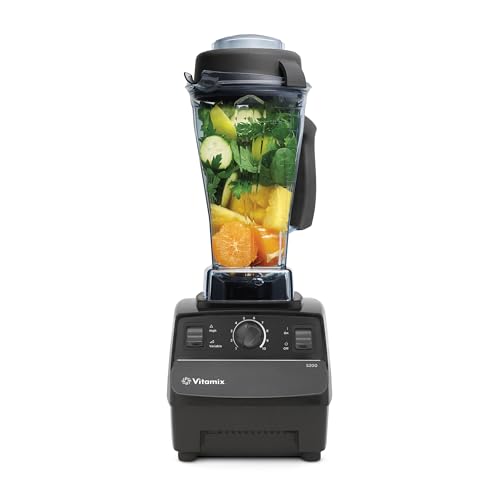
A Vitamix represents the high-dollar version of the kitchen rebuy story. People who blend frozen fruit or fibrous greens every morning burn through $50 blenders every year or two before buying a Vitamix 5200 that runs for twenty years. That math only works if you are a heavy user; if you make smoothies three times a summer, stay with the $40 blender.
The small stuff that quietly adds up
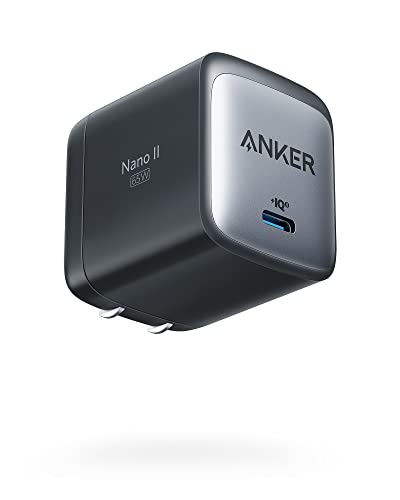
Anker chargers and cables come up constantly as the cure for frayed, intermittent phone cords. From r/BuyItForLife:
“I’m now sold on Anker products (chargers, extension cords, etc.). Not outrageously expensive, but worth it.”
Commenters also point out that no cable lasts forever if it gets yanked at sharp angles, and UGreen has gained ground right alongside Anker for braided USB-C cords. From the same thread:
“I’ve had a few Anker cables die prematurely. They warrantied one so that’s cool, I do prefer UGreen now though. They have really solid metal ends typically.”
Darn Tough socks solve the clothing version of the treadmill. Multi-pack department-store socks thin out at the ball of the foot within a year; Vermont-knit merino wool socks hold their cushion for years and carry a no-questions-asked lifetime replacement warranty. From r/BuyItForLife:
“Socks. I was sick of spending twelve dollars on a pair of wool socks at the farm store and leaving little sock seeds everywhere. Darn Tough convert here.”
Two more sub-$40 swaps show up repeatedly: a fast digital instant-read thermometer (ThermoPro or Thermapen) to replace slow dial meat thermometers that drift off-temperature, and a rechargeable headlamp to replace cheap AA flashlights that leak battery acid in kitchen drawers.
When the upgrade is about your body, not your wallet
Some upgrades pay you back in avoided back pain or dental bills rather than direct replacement math.
An electric toothbrush is the easiest win. Moving from a manual brush or a weak AA-battery spin brush to a rechargeable Philips Sonicare or Oral-B oscillating brush leaves your teeth noticeably cleaner. From r/HomeImprovement:
“Philips Sonicare. I remember using it for the first time and feeling like I had just gone to the dentist. I had an inexpensive, battery-powered toothbrush at one time as well, but it didn’t compare to the expensive electric version.”
One important warning from recent threads: stick to the $35–$50 entry-level Sonicare 4100 or Oral-B Pro 1000 rather than spending $200 on flagship handles, since battery and button seals can still wear out after a few years. From r/BuyItForLife:
“Had failures in 2 new Sonicares in a period of 12-18 months. Both had issues with the power button failing since it isn’t sealed properly like the old units.”
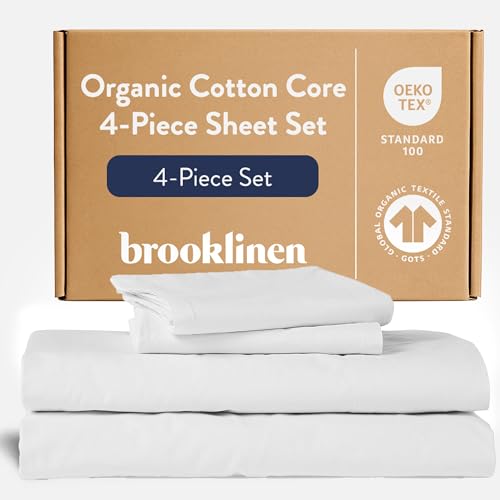
Bed sheets follow a similar rule: skip the $20 polyester microfiber sets that trap sweat and pill in the wash, step up to a mid-range pure cotton percale set (like Target Threshold, Costco Kirkland, or LL Bean), and ignore $300 luxury marketing.
An office chair is the biggest ergonomics upgrade on the list. Remote workers cycle through $90 bonded-leather staples chairs whose foam pancakes in a year and whose armrests peel, then buy a refurbished Steelcase Leap V2 or Herman Miller Aeron from an office liquidator for $300 to $450 and sit comfortably for the next decade.
When cheap is fine
Not every cheap item is a trap. Across the same frugal and BIFL threads, commenters consistently defend the budget tier in four categories:
- Air fryers. A $60 to $90 basket air fryer crisps food just as well as a $250 model, and all nonstick baskets eventually show wear.
- Rice cookers. A $25 one-switch Aroma pot cooks rice reliably for years; stepping up to a $180 Zojirushi is nice for daily rice households, not mandatory.
- Entry-level electric toothbrushes. A $40 Sonicare or Oral-B uses the same core motor action as the $200 Bluetooth version.
- Occasional-use tools. If you need a specialty wrench or tile cutter for one Saturday bathroom project, a budget Harbor Freight tool makes more sense than a pro-grade splurge.
How to tell which categories punish cheap
Before paying up for a premium version, run the item through four quick checks:
- Does the cheap version have a built-in wear point? Sprayed nonstick coatings, bonded faux leather, and unbraided cords fail on a schedule.
- Do you touch it at least three times a week? High frequency turns a small upgrade into a massive quality-of-life return.
- Where is the sweet spot on the price curve? A $45 Victorinox knife or a $25 Lodge pan beats a $10 supermarket version by miles, while a $300 boutique version adds mostly cosmetics.
- Have you already replaced the cheap one twice? Once you buy the same disposable item a third time, the category has answered the question for you.
The other side of the upgrade gospel
Keep one check on the “buy nice or buy twice” mantra: Reddit loves a good upgrade story, and nobody writes a 500-upvote post about a $12 toaster that quietly worked fine for nine years.
It is easy to use “buy it for life” as an excuse to buy pro-grade gear for a hobby you started last Tuesday. Don’t replace working budget items preemptively. Wait until the cheap version wears out or frustrates you in weekly use, then buy the mid-range staple that ends the cycle.
FAQ
What is the best cheap-to-durable upgrade for the money?
A $25 Lodge cast iron skillet (or a $45 Victorinox Fibrox chef’s knife). Both cost roughly the same as the disposable supermarket versions they replace and last for decades.
Are these affiliate recommendations or independent?
The picks come from recurring discussions across r/BuyItForLife, r/Frugal, r/Cooking, and r/HomeImprovement. Upvote Picks does not accept brand payments for placement. When a product card links to Amazon, we may earn a small affiliate commission at no extra cost to you.
Isn’t this just telling people to spend more money?
No: in most categories, the sweet spot sits right near the bottom of the price range ($25 for cast iron, $45 for a chef’s knife, $40 for an electric toothbrush, $15 for a braided charger). The goal is skipping the disposable bottom rung, not buying luxury goods.
Why do some products appear across multiple guides on your site?
Because a handful of items (like a Lodge cast iron skillet, a Victorinox chef’s knife, and Darn Tough socks) independently dominate the “under $50,” “wish I bought sooner,” and “replaced the cheap version” threads on Reddit.
Source notes
A few of the discussions behind this guide:
- What was the item that made you hop on the buy-it-for-life train? (r/BuyItForLife)
- What’s the highest value item you’ve ever bought? (r/BuyItForLife)
- What new brands or older ones still make high quality? (r/BuyItForLife)
- Disappointed in the declining durability of Sonicare (r/BuyItForLife)
Related guides
For deeper dives into the kitchen upgrades covered here, see the kitchen tools r/Cooking reaches for every day, the best budget chef knife, and the kitchen gadgets to skip. For workshop gear, check out the best power tool brand on Reddit.